Fitting Out Our Corporate Gym on a Deadline: Why I Paid for Certainty
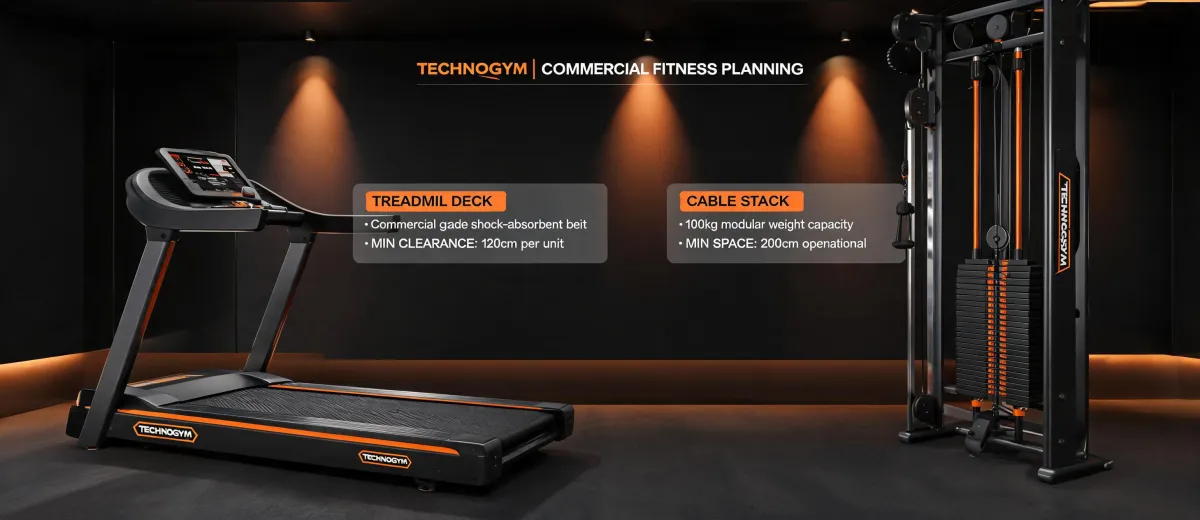
It was a Tuesday afternoon in late October 2024 when the email from our VP of HR landed in my inbox. Subject line: 'New Office Gym - Fast Track.' The message was short: 'We've approved the budget for the new wellness floor. We need it operational before the New Year morale event. You have two months.'
I stared at the screen. For an office administrator managing purchasing for a 350-person company, this wasn't just a shopping list. It was a logistical puzzle with a hard deadline—and I'd been burned by tight timelines before.
Why Technogym Wasn't Just a Choice; It Was a Bet
If you'd asked me six months earlier about specifying gym equipment, I'd have said the conventional wisdom is usually right: pick the brand with the best warranty and the shortest lead time. Everything I'd read about corporate wellness setups said functionality wins over brand prestige. In practice, I found the opposite.
The VP wanted 'best-in-class.' That meant Technogym. Partly because of their reputation for biomechanics-based machines, partly because the CEO had one in his home and loved the cloud platform. But mostly because the company brochure for the new office already featured a rendered image of a Technogym Skillrow.
The pressure was on. We weren't just buying equipment; we were filling a promised space.
The First Red Flag: Inventory vs. Delivery
I started with research. The standard advice is to get three quotes and compare lead times. I called two online fitness equipment distributors and one local dealer. All three quoted the Technogym Run and the Technogym Artis Chest Press. The price ranges were within 10% of each other.
But then I asked the question that distinguishes a requester from a responsible buyer: 'Can you guarantee delivery by December 15th?'
The online guys gave me the 'probably' word. 'Probably around mid-December,' one said. 'We'll do our best,' said the other. The local dealer gave me a hard no—12-week lead times on certain frames.
Not ideal. Worse than useless. 'Probably' is a promise that shifts risk from the vendor to me. In my experience, when a supplier says 'probably,' they mean 'we'll try, but if we fail, it's not our problem.'
Why 'Probably' Cost Me Money Before
People think rush orders cost more because they're harder. The reality is they cost more because they're unpredictable—they disrupt planned workflows and squeeze inventory buffers. The vendor isn't charging for labor; they're charging for certainty.
An example? In 2022, I ordered promotional materials for our annual summit. The printer's standard quote was $1,200 with a 10-day lead time. They offered a 'priority lane' for $1,600 with a 5-day guarantee. I chose the standard lane. They delivered on day 9, but the color was off. The reprint took another 7 days. We missed the deadline. The expedited shipping for the corrected order cost $400. Total cost: $1,600 for a result that arrived after the event. The 'cheaper' option cost more and failed.
I wasn't making that mistake again.
The Decision: Paying for a Guarantee
The local dealer couldn't help. The online distributors couldn't commit. I found myself on the Technogym B2B portal, looking at their direct sales option for commercial projects. Their quote came back 18% higher than the cheapest distributor.
The numbers said go with the cheapest distributor. My gut said something was missing.
Every spreadsheet analysis pointed to the budget option. Something felt off about their responsiveness to my delivery question. Turns out 'slow to confirm' was a preview of 'unable to guarantee.'
I called the Technogym project manager directly. 'Can you get me a Technogym Run, an Artis Chest Press, the Skillrow, and a bench by December 15th?' I asked. There was a pause. 'It will cost a premium for priority manufacturing and white-glove shipping, but yes, we can guarantee it.' The add-on was roughly $1,800—about 12% of the total equipment cost.
I signed the deal that afternoon.
What the Extra $1,800 Actually Bought
People think a rush fee buys speed. That's only half the story. The real purchase is risk transfer. I paid $1,800 to make their problem my certainty.
- Inventory allocation: They reserved units from their next production batch for me.
- Logistics priority: My order had a dedicated handler who flagged any potential delay 72 hours in advance.
- Installation crew: They scheduled two certified technicians for a single-day install, rather than leaving it to a third-party logistics crew.
Was it worth it? The equipment arrived on December 8th. Installed by the 10th. The New Year morale event on January 4th, 2025, was held in our fully operational gym. The CEO used the Skillrow. The VP of HR shook my hand. The 'probably' vendors? One of them sent a backorder notice on December 1st.
The Lesson: Certainty Has a Price, But Uncertainty Has a Cost
In my opinion, the extra cost is justified when the deadline is non-negotiable. If you're a purchasing manager for a hotel opening in 8 weeks, or a facilities director for a corporate roll-out, the 'cheapest' option isn't just the one with the lowest invoice. It's the one with the lowest total cost including risk.
The conventional wisdom is to always get multiple quotes. My experience with 60-80 orders annually suggests that when time is tight, relationship consistency and delivery guarantees beat marginal cost savings. It's not about being profligate; it's about being realistic about what 'cheap' really means when failure costs your job.
Take this with a grain of salt: not every purchase needs a premium rush. But for high-stakes, deadline-driven projects? Pay for the certainty. It's cheaper than the alternative.

Jane Smith
I’m Jane Smith, a senior content writer with over 15 years of experience in the packaging and printing industry. I specialize in writing about the latest trends, technologies, and best practices in packaging design, sustainability, and printing techniques. My goal is to help businesses understand complex printing processes and design solutions that enhance both product packaging and brand visibility.