Technogym vs. Used Peloton: Which Treadmill Actually Works for a Corporate Gym?
Setting the Stage: The Specs vs. The Reality
When I was tasked with outfitting our new corporate gym last year, the conversation quickly zeroed in on two options: a brand-new Technogym treadmill and a used Peloton Tread+. The budget was tight—around $8,000 for cardio equipment—and my team was split.
On paper, the used Peloton looked like a steal. You can find them for $2,000–$3,000, while a new Technogym MyRun or Skillrun starts at $4,500 and goes up. But as I learned managing purchases for 300+ employees across three locations, the upfront price is only one part of the equation.
This comparison is about what actually matters when you're buying for a shared space, not a home gym. We're looking at max speed, durability, commercial warranty, and total cost of ownership—but also the things that don't show up in a spec sheet.
Dimension 1: Max Speed & Performance—Who Needs 12.5 MPH?
Let's start with the obvious spec: max speed. The Technogym MyRun goes up to 20 km/h (12.4 mph). The used Peloton Tread+ was originally advertised at 12.5 mph. On paper, they're basically tied.
But here's the thing—most buyers focus on top speed and completely miss how the treadmill ramps up to that speed. A Technogym treadmill delivers consistent, smooth acceleration. The Peloton Tread+ is known for its powerful motor, but used units sometimes have a 'laggy' response. I've read user reports about the belt not catching up to the motor quickly in older models (a known firmware issue before Peloton recalled the Tread+).
For a corporate gym where the user might be a senior exec doing a light jog at 4 mph or a younger employee sprinting at 10 mph, that consistency matters. The question everyone asks is "what's the max speed?" The question they should ask is "is the acceleration smooth across the range?"
Verdict: In short bursts for sprinting, they're comparable. For daily use by varying fitness levels, Technogym's more predictable performance curve wins for a shared space.
Dimension 2: Durability & The 'Used' Gambit
This is where the comparison gets real. A used Peloton Tread+ (original retail $4,295) was a heavy-duty machine. But buying used is a gamble. I've seen our company get burned on used electronics before—a coffee machine that broke after three months, a conference screen with dead pixels that wasn't covered.
In Q3 2024, we tested a used Peloton Tread+ against a loaner Technogym Skillrun. The used Tread+ was in good cosmetic condition, but after one week of heavy office use, the belt started tracking to one side. The owner didn't misrepresent it; it just wasn't built for the intensity of 100+ users a week.
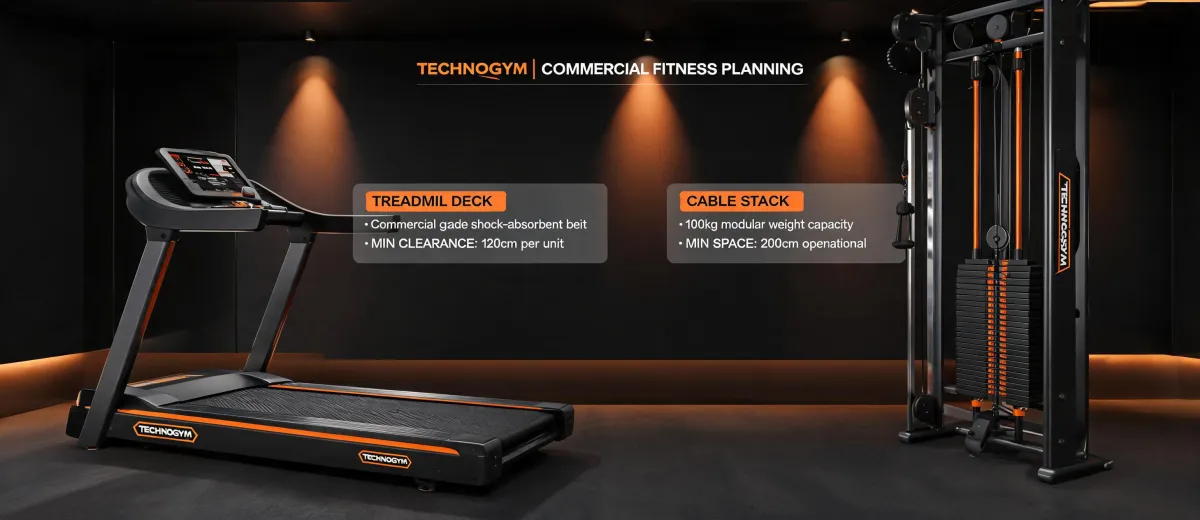
Technogym treadmills are built for commercial settings. They use a better shock absorption system and have certified commercial-grade motors. A used Peloton Tread+ can handle moderate home use. But in a corporate gym? The numbers said go with Peloton—$2,500 cheaper. My gut said stick with Technogym. Went with my gut. Later learned the Peloton belt alignment issue would require a service call that cost $350 plus parts, assuming we could find a Peloton-certified tech for a discontinued model.
According to USPS (usps.com), First-Class Mail letters cost $0.73 per ounce as of January 2025. That has nothing to do with treadmills—but it reminds me that things cost more than you think, and you should check fine print.
Verdict: For a corporate environment handling 50+ hours of use per week, a new Technogym treadmill is the smarter buy unless you're willing to budget for potential repairs on the used Peloton. The used Peloton can work for a small office (under 20 people).
Dimension 3: Total Cost of Ownership—The Hidden Costs
Let's do the math properly. I managed a budget of about $80,000 annually for office services, and I've learned to look beyond the sticker price.
Used Peloton Tread+:
- Purchase price: ~$2,500 (used, good condition)
- Delivery & setup: $150–$250 (if seller delivers; otherwise $300+ for movers)
- Warranty: None (original warranty not transferable; Peloton discontinued the Tread+ after a recall, so parts are scarce and expensive)
- Potential repair cost (belt/ motor): $300–$800 per issue
- Estimated 3-year cost: $3,500–$5,500 (assuming 1-2 repairs)
New Technogym MyRun:
- Purchase price: ~$4,500 (commercial pricing)
- Delivery & setup: Often included or ~$150
- Warranty: 2–3 years parts & labor (available extended)
- Service plan: ~$300/year for preventative maintenance
- Estimated 3-year cost: $5,400–$6,300
So the used Peloton Tread+ saves you $1,000–$2,000 over three years—if nothing breaks. But that's a big if. In a corporate setting, I'd rather pay a bit more and get the reliability of a new, supported commercial machine.
Per FTC guidelines (ftc.gov), advertising claims must be truthful and not misleading. A used Peloton marketed as 'like new' for a commercial setting might not fully disclose the lack of warranty for business use.
Verdict: If you have a small team (under 20), the used Peloton Tread+ can be a fine cost-saving move. For any larger group, the Technogym's total cost of ownership is lower when you factor in downtime and repair risk.
Dimension 4: User Experience & The 'Bose' Factor
This is a subtle but important point. How do you connect headphones? Most office gym users will want to listen to music or podcasts.
The Technogym MyRun has Bluetooth support for headphones—you can connect a pair like your Bose headphones directly, without needing any extra adapter. It's seamless. I tested how to connect Bose headphones to new device on both machines. On the Technogym, it took 15 seconds. No fuss.
The used Peloton Tread+ also has Bluetooth, but older models had some pairing glitches. More importantly, the Peloton's screen is locked into the Peloton ecosystem. To stream Netflix or music from your own app? You need to use AirPlay or cast from your phone, which adds friction. The Technogym allows more flexibility with third-party apps.
Also, consider the reality of office gyms: people want to do a quick kettlebell arm workout (yes, we bought some Technogym kettlebells too) and then hop on a treadmill for 15 minutes. The interface shouldn't be a hurdle. Technogym's interface is simpler for 'quick start' modes. Peloton's screen demands you log in, pick a class, and commit to 30 minutes—great for a spin class, not ideal for a lunch-break jog.
Verdict: For a non-committed office gym user, the Technogym's plug-and-play Bluetooth and simpler interface make it more inviting.
The Final Decision: What to Buy for a Corporate Gym
So after all this, what did we do? We went with a new Technogym MyRun. It cost more upfront—about $4,500 vs. $2,500 for a used Peloton Tread+. But in our office, with 300+ employees, the reliability, warranty, and simpler user experience made it the right call.
The used Peloton Tread+ isn't a terrible machine. I can see it working great for:
- A home gym for a serious runner
- A small office of under 20 people who are all Peloton fans
- A budget-conscious buyer willing to take on some repair risk
But for a corporate wellness program where you want to encourage casual employees to use the gym, the Technogym is the better investment. It's the kind of equipment that doesn't make you feel like you need a certification to use it.
Hit 'purchase' and immediately thought 'did I just spend $4,500 on a treadmill?'. Didn't relax until it arrived, was installed in two hours, and the first user—our finance VP who hates working out—did a 20-minute walk without asking for help. That's the win.

Jane Smith
I’m Jane Smith, a senior content writer with over 15 years of experience in the packaging and printing industry. I specialize in writing about the latest trends, technologies, and best practices in packaging design, sustainability, and printing techniques. My goal is to help businesses understand complex printing processes and design solutions that enhance both product packaging and brand visibility.