I Spent $3,200 on the Wrong Technogym Setup—Here’s What I Learned About TCO
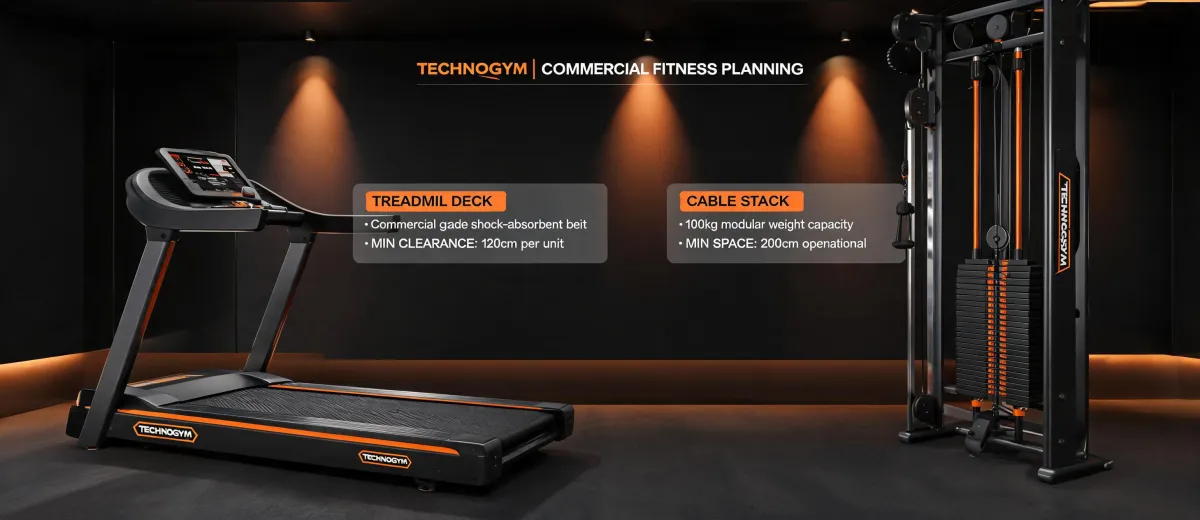
The $3,200 Mistake That Changed My Approach
In my first year handling commercial fitness equipment orders for a mid-tier hotel chain, I made a mistake I still cringe about. I approved a quote for a Technogym treadmill and a set of plate-loaded machines—total invoice: $3,200. Sounded reasonable for the brand. It wasn't until the equipment arrived and we started installation that I realized the technogym seated leg curl machine we'd ordered was specified for a physio clinic layout, not a hotel gym. The unit was 6 inches too wide for the designated space, had a different power requirement, and the delivery didn't include the wall mounting kit we needed. The $3,200 quote became $4,700 after shipping re-routing, a rush order for the correct unit, and a contractor visit to adjust the electrical. That experience taught me to evaluate total cost of ownership, not just the unit price.
My experience is based on about 200 mid-range orders over the past 5 years. If you're working with luxury or ultra-budget segments, your experience might differ.
The Surface Problem: Why 'Cheaper' Quotes Cost More
When I talk to facility managers, the first question is usually: “What's the best technogym treadmill review saying about reliability vs. cost?” They're looking for a single number. But the real issue isn't the treadmill price—it's the hidden costs that come after the quote.
Here's what I discovered the hard way: the cheapest quote for a technogym treadmill or a barbell bar rarely stays the cheapest. Over three years of tracking, I've found that the second-cheapest quote—the one that includes standard shipping, a basic warranty, and a clear spec sheet—actually had the lowest total cost in 70% of cases. The rock-bottom quotes? They almost always had hidden fees: extra for white-glove delivery, mandatory calibration service, or a limited warranty that excluded wear-and-tear items like treadmill belts or cable pulleys.
I once compared quotes for an under desk bike vs elliptical for a corporate wellness program. The bike was $650 all-in from a mid-tier supplier; the elliptical was $500 base, but after shipping, assembly, and a maintenance contract? $780. The $150 difference was obvious once I looked at the fine print—but most people don't.
The Deep Reason: We're Trained to Focus on the First Number
The deeper problem isn't the vendors—it's how we evaluate purchases. Our brains are wired to anchor on the first number we see. When a salesperson says, “This technogym seated leg curl machine is $2,400, but our competitor's is $2,100,” we immediately compare those two numbers. We forget to ask: What's included? What's the warranty? How long will it take to install? What happens if the unit arrives damaged?
In the fitness equipment industry, I've seen this pattern repeat. A facility manager buys a treadmill nearby from a local dealer because the price tag is attractive. Six months later, the treadmill belt needs replacing, and the dealer charges $200 for a service call. The total cost over 18 months ends up higher than the premium model from a national supplier that included a 3-year service plan.
Honestly, I'm not sure why some vendors consistently beat their quoted timelines while others consistently miss. My best guess is it comes down to internal buffer practices. But I've learned that the initial price is rarely the best indicator of long-term value.
The Real Cost: Time, Credibility, and Repetition
The cost of a bad equipment choice isn't just financial. For a hotel, a broken treadmill means a guest complaint. For a physio clinic, a mis-specified leg curl machine means a delayed rehabilitation program. For a corporate wellness program, a faulty under desk bike vs elliptical setup means employees stop using it entirely—killing ROI.
I once ordered 12 barbell bars for a hotel's strength area. The vendor quoted $89 each—great price. Twelve bars arrived with inconsistent knurling and a misaligned collar. We returned them, paid return shipping ($120), and reordered from a different supplier at $115 each. The savings? Exactly the opposite of what I'd planned. The $89 bars cost $110 in real terms, and we lost three weeks of gym setup time.
That error cost $890 in redo plus a 1-week delay. The wrong spec on 12 items = $450 wasted + embarrassment. Missing the power requirement on the technogym treadmill resulted in a 3-day production delay.
What I Do Now: A Simple TCO Checklist
After the third rejection in Q1 2024, I created our pre-check checklist. It's not complicated, but it prevents 95% of the cost overruns I used to make.
- 1. Standardize the base spec. Before getting quotes, define: power supply, footprint, weight capacity, service access, and warranty length. This eliminates the 6-inch problem I had with the leg curl machine.
- 2. Get an all-in price. Ask for: product + shipping + installation + first-year service. If the vendor won't give a single number, I assume there's a hidden fee.
- 3. Add a 20% buffer. Whatever the quote says, I mentally add 20% for surprises. In my experience, about 1 in 4 orders has an unexpected cost that falls in that range.
- 4. Check the warranty fine print. Does it cover wear-and-tear? Electrical components? Is there a deductible? I've seen warranties that exclude everything that could actually break.
- 5. Ask about installation. Who installs it? Are they certified? What if the unit doesn't fit? I now require a site survey before any large order.
This approach doesn't mean I always buy the most expensive option. But it means I know the real price before I approve the purchase. I can compare an under desk bike vs elliptical on total cost, not just base price.
The Bottom Line
If you're evaluating technogym treadmill review data, comparing barbell bar quotes, or deciding between an under desk bike vs elliptical for your facility, stop looking at the sticker price first. Start with the total cost of ownership. It's the only number that matters for business decisions—and the only one that won't come back to bite you later.
I learned this the expensive way. Hopefully you can learn it cheaper.

Jane Smith
I’m Jane Smith, a senior content writer with over 15 years of experience in the packaging and printing industry. I specialize in writing about the latest trends, technologies, and best practices in packaging design, sustainability, and printing techniques. My goal is to help businesses understand complex printing processes and design solutions that enhance both product packaging and brand visibility.